
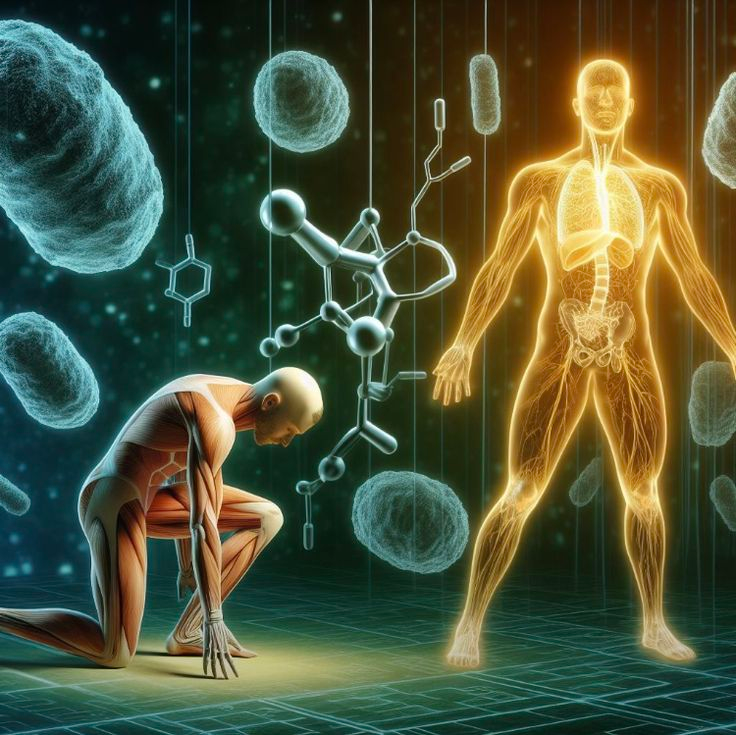
Unlocking the Language of the Body
Peptides are short chains of amino acids — the same building blocks that form proteins. What makes peptides unique is their ability to act as precise biological messengers, telling cells exactly what to do and when to do it.
In the human body, peptides regulate essential functions such as:
- Hormone signaling
- Cellular repair and regeneration
- Metabolism and fat utilization
- Immune response
- Cognitive function
- Muscle growth and recovery
How Peptides Work
Think of peptides as biological instructions.
They bind to specific receptors on cells and trigger targeted responses — unlike many compounds that affect the body broadly, peptides work with precision.
This targeted action allows researchers to study:
- Cellular communication
- Mitochondrial efficiency
- Tissue repair mechanisms
- Neuroprotective pathways
- Metabolic signaling
Because of this precision, peptides have become one of the most exciting areas of modern biological research.
Why Peptides Matter
Peptides play key roles in:
- Cell signaling (e.g., insulin, growth hormone–related peptides)
- Immune response
- Skin regeneration & aging
- Metabolism & fat loss
- Muscle growth & recovery
- Neurological function
Because of their specificity, peptides are often:
- More targeted than traditional drugs
- Less likely to cause systemic side effects